
Invited Talks
6 Events
Sydney Invited Talk
Scaling Experience in the Wild: Building the Industrial Learning Loop
About the speaker
Tie-Yan Liu
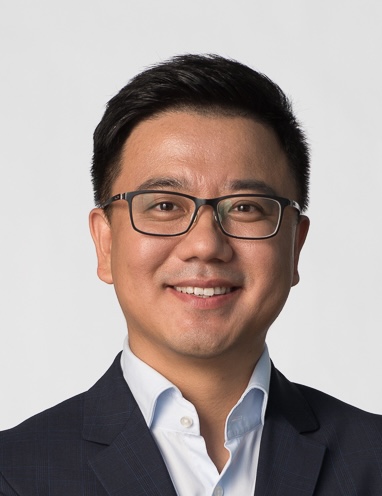 Tie-Yan Liu is the founding President of Zhongguancun Academy in Beijing. His research spans machine learning and its application to industrial transformation and scientific discovery, with pioneering contributions to learning to rank, computational advertising, efficient and distributed machine learning, unsupervised machine translation, and scalable AI-for-Science models. Before starting the Academy in 2024, he spent over two decades at Microsoft Research (MSR), serving as Assistant Managing Director of MSR Asia and later as Distinguished Scientist of MSR AI for Science. He has published several hundred papers, cited over 110,000 times with an h-index of 115, and has served as program chair and senior area chair at major AI conferences. BenchCouncil's AI100 list names him among the most influential contributors to AI since 1943, and his work LightGBM among the 100 most important achievements in the field. He is a Fellow of the IEEE, and the ACM, and has held adjunct or honorary professorships at Carnegie Mellon, Tsinghua, and the University of Nottingham, among others.
Abstract
AI’s nextphase will be shaped by learning from real-world experience. In industry, however, such experience is embedded in proprietary workflows, physical experiments, and decisions with real consequences. Turning such experience into a reliable source of learning requires more than deploying capable models. In this talk, I will describe our efforts to build the industrial learning loop through four connected foundations.
1) Access to training. Frontier model development remains concentrated in a handful of AI companies. To enable others to train their own models, we released an open, end-to-end, frontier-grade pipeline—from cluster setup to inference, including code, weights, corpus, environments, and logs.
2) The hands to build. Industrial data often cannot leave the building, and domain experts should not have to become AI engineers. Our agentic R&D system is designed for in-house development: experts define tasks, constraints, and acceptance criteria in natural language, while agents coordinate experimentation, model post-training, and workflow development. In one deployment, 300 AI agents worked together to post-train a roughly 400-billion-parameter model in two months.
3) Readiness on both sides. General-purpose AI often falls short of industrial requirements, while industrial infrastructure is rarely designed to support iterative learning. To address these challenges, we developed specialized models—from quantum chemistry at the scale of 100,000 atoms to a DNA model 200 times faster than before—alongside autonomous laboratories for high-throughput experimentation with AI models in the loop.
4) Training grounds built on trust. Industrial environments cannot simply be scraped. We therefore designed institutional arrangements in which enterprises define problems and partners share risks, creating incentives to open the loop. Across six enterprise groups and nine joint programs, individual engagements began to form shared infrastructure.
Together, these pieces set the industrial learning loop in motion on a materials problem in the semiconductor sector that had resisted progress for decades, delivering a result that met industrial standards and was accepted by domain experts.
View full details
Sydney Invited Talk
Barbara Engelhardt
About the speaker
Barbara E Engelhardt
 Barbara E Engelhardt is a Senior Investigator at Gladstone Institutes and Professor at Stanford University in the Department of Biomedical Data Science. She received her B.S. (Symbolic Systems) and M.S. (Computer Science) from Stanford University and her PhD from UC Berkeley (EECS) advised my Prof. Michael I Jordan. She was a postdoctoral fellow with Prof. Matthew Stephens at the University of Chicago. She was an Assistant Professor at Duke University from 2011-2014, and an Assistant, Associate, and then Full Professor at Princeton University in Computer Science from 2014-2022. She has worked at Jet Propulsion Labs, Google Research, 23andMe, and Genomics plc. In her career, she received an NSF GRFP, the Google Anita Borg Scholarship, the SMBE Walter M. Fitch Prize (2004), a Sloan Faculty Fellowship, an NSF CAREER, and the ISCB Overton Prize (2021). Her research is focused on developing and applying models for structured biomedical data that capture patterns in the data, predict results of interventions to the system, assist with decision-making support, and prioritize experiments for design and engineering of biological systems.
Abstract
View full details
Sydney Invited Talk
The Better AIngels of our Future
About the speaker
Satinder Singh
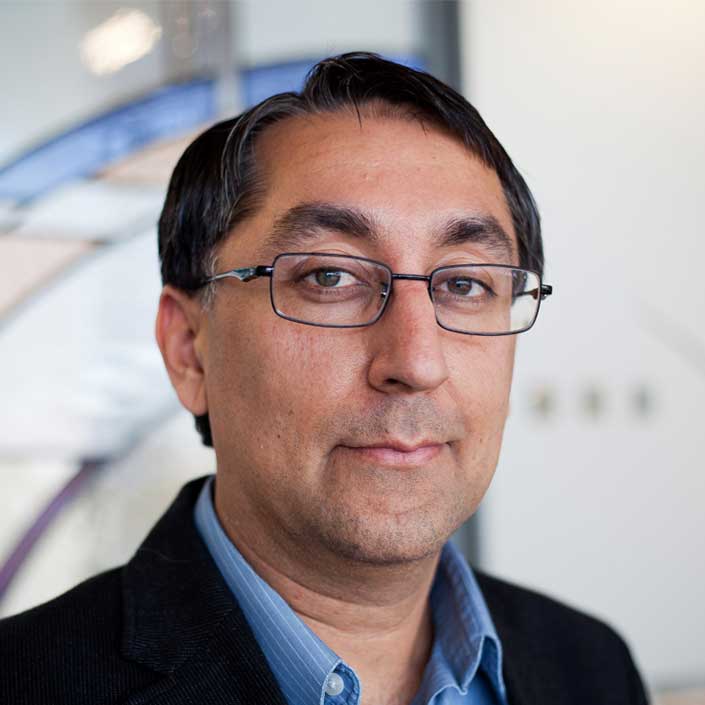 My main research interest is in the old-fashioned goal of Artificial Intelligence (AI), that of building autonomous agents that can learn to be broadly competent in complex, dynamic, and uncertain environments. The field of reinforcement learning (RL) has focused on this goal and accordingly my deepest contributions are in RL. A very recent effort combines Deep Learning and Reinforcement Learning.
Abstract
Satinder Singh
Google DeepMind & University of Michigan
There is no such thing as reward-hacking, there is only bad reward design and good reward design. Indeed, Reinforcement Learning is *the* solution to alignment, not the problem. I will make the case that what we need are powerful AIs that have their own (human-designed) reward functions that care about long-term consequences of behaviors including instruction-following. I will also briefly lay out a possible research program for building these better AIngels of our future from our frontier models. This program will advance (1) designing good rewards that reflect the better angels of our own nature and (2) planning with local-world models—models that include us.
*From joint position paper with Richard Lewis, University of Michigan
View full details
Sydney Invited Talk
To score or not to score
About the speaker
Cheng Soon Ong
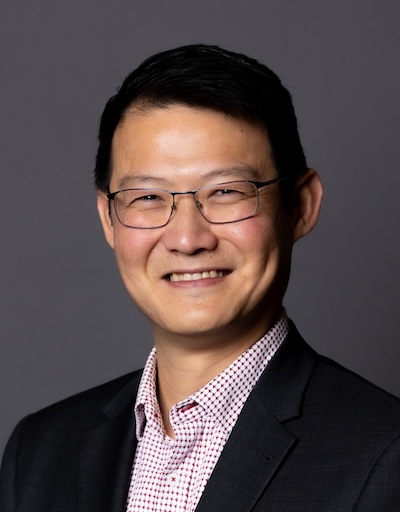 Cheng Soon Ong is the science director at the Technology Research Unit in CSIRO. He works on extending machine learning methods and enabling new approaches to scientific discovery, and has led programs of research including foundational machine learning in science and purpose driven machine learning applications at CSIRO. He supervises and mentors many junior scientists, collaborates with scientists on problems in genomics and astronomy, advocates for open science, and is an adjunct Associate Professor at the Australian National University. He is co-author of the textbook Mathematics for Machine Learning, and his career has spanned multiple roles in Malaysia, Germany, Switzerland, and Australia.
Abstract
Scoring the performance of a machine learning model is a key choice we all make, whether it is the loss for training a model, a gap for understanding alignment, or a metric such as accuracy for predictive performance. This talk considers the score we use in adaptive experimental design for scientific discovery, where we use bandit type approaches to choose experiments. I show some recent theoretical and practical work on adaptive design and discuss the needs of cross disciplinary collaboration for AI in science, for example to empirically validate bandit designs in a genomics lab.
On the other side, machine learning researchers may be tempted to generalise the idea of optimising a score to other aspects of work and life. I argue that it is problematic to convert the diversity of human experience into a single scalar score, and then optimising that score. Finally I discuss some preliminary results on what could be in between scoring and not scoring.
View full details
Sydney Invited Talk
The Knowledge Box: AI and Epistemic Dispossession
About the speaker
Shannon Vallor
 Professor Shannon Vallor FRSE is the Baillie Gifford Chair in the Ethics of Data and Artificial Intelligence in the Department of Philosophy at The University of Edinburgh, where she also codirects the Centre for Technomoral Futures in the university’s interdisciplinary Edinburgh Futures Institute. Prof. Vallor’s research explores how AI, robotics, and data science reshape human character: our habits, virtues and capabilities. Professor Vallor's work includes advising policymakers and industry bodies on the ethical design and use of AI, and she is a former Visiting Researcher and AI Ethicist at Google. She is the recipient of multiple prizes and awards for her research, including the 2026 Barwise Prize in Philosophy and Computing from the American Philosophical Association, the 2026 Leadership Award from the UK’s AI and Robotics Research Awards, and the 2022 Covey Award from the International Association of Computing and Philosophy. She is a standing member of Stanford University’s One Hundred Year Study of Artificial Intelligence (AI100), EY’s Global AI Advisory Council, and a member of the Oversight Board of the Ada Lovelace Institute. She is the author of two monographs, Technology and the Virtues: A Philosophical Guide to a Future Worth Wanting, from Oxford University Press in 2016, and The AI Mirror: How to Reclaim Our Humanity in an Age of Machine Thinking, from Oxford University Press in 2024.
Abstract
This talk reflects on the future of learning as generative artificial intelligence becomes both a powerful engine of epistemic production and of epistemic dispossession. The latter refers to the wide-scale removal of knowledge as a good created, enacted and held by human beings, challenging the mainstream view of AI as a promise of human knowledge abundance. After outlining five dimensions of dispossession realized through the extraction, severance, control, distortion and enclosure of knowledge, I explore the alternatives to epistemic dispossession, and the conditions under which it might be able to be resisted.
View full details
Sydney Invited Talk
The Future of AI Evaluation
About the speaker
José Hernández-Orallo
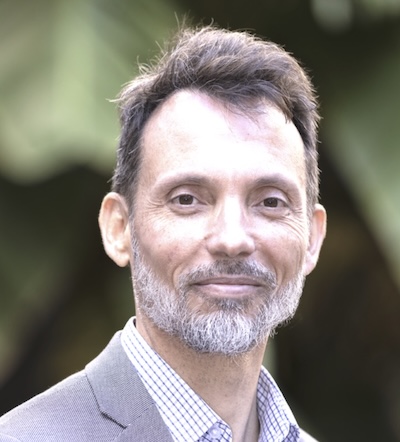 Jose H. Orallo is Director of Research at the Leverhulme Centre for the Future of Intelligence, University of Cambridge, UK, and Professor (on partial leave) at TU Valencia, Spain. He pioneered the use of algorithmic information theory, psychometrics and cognitive science in AI evaluation, to better understand and anticipate the capabilities, generality, progress, impact and risks of artificial intelligence. He has published five books and more than two hundred journal articles and conference papers in Nature, Science, CACM, NeurIPS, ICML, ACL, AAAI, etc. His research in the area of machine intelligence evaluation has been covered by several popular outlets, such as The Economist, WSJ, FT and New Scientist. He keeps exploring a more integrated view of the evaluation of natural and artificial intelligence, as vindicated in his book The Measure of All Minds (Cambridge University Press, 2017, PROSE Award 2018). He is an EurAI fellow and has been advising national and international organisations such as the EU, OECD, the UK and Spanish governments, and contributes to the scientific panel of the EU AI Office. He is a founder of aievaluation.substack.com and ai-evaluation.org. In 2026 he received the Spanish National Award in Computer Science.
Abstract
AI evaluation is finally shifting from aggregate performance metrics on specialised benchmarks to rich profiles of capabilities and propensities. Determining task demands and incentives, and comparing them against these profiles makes it possible to predict and explain performance and harm; this is the true objective of AI evaluation. Just as we are beginning to extend this to evaluations that are more human-centred and society-relevant, new challenges arise. In performance evaluations, we struggle to build verifiable, superhuman tasks of arbitrary difficulty. In safety evaluations, we can no longer build testing sandboxes that are realistic, contained and secure. In both cases, we face continual learning, with ever-evolving AI systems, and evaluation awareness, with deliberate sandbagging or judge manipulation. In this new world for AI evaluation, I propose a blend of pragmatism and foundational work. We must accept that AI systems will be unreliable, insecure, and misaligned, requiring evidence-based red lines and monitoring. We must also overhaul scaling laws and supervision, and explore new formalisms, such as relative 'supraintelligence', back in computational terms. And we must choose the right level and extent of AI evaluation automation to make AI oversight both scalable and controllable. AI development may have entered open-ended recursive self-improvement, but we cannot afford to let that happen with AI evaluation.
View full details
No Events Found
Try adjusting your search terms
Invited Talks
Scaling Experience in the Wild: Building the Industrial Learning Loop
About the speaker Tie-Yan Liu
Abstract
Barbara Engelhardt
About the speaker Barbara E Engelhardt
Abstract
The Better AIngels of our Future
About the speaker Satinder Singh
Abstract
To score or not to score
About the speaker Cheng Soon Ong
Abstract
The Knowledge Box: AI and Epistemic Dispossession
About the speaker Shannon Vallor
Abstract
The Future of AI Evaluation
About the speaker José Hernández-Orallo
Abstract
No Events Found
Try adjusting your search terms