
Bridging Governance and Technology: Data, Models, and Responsibility in Regulation
Abstract
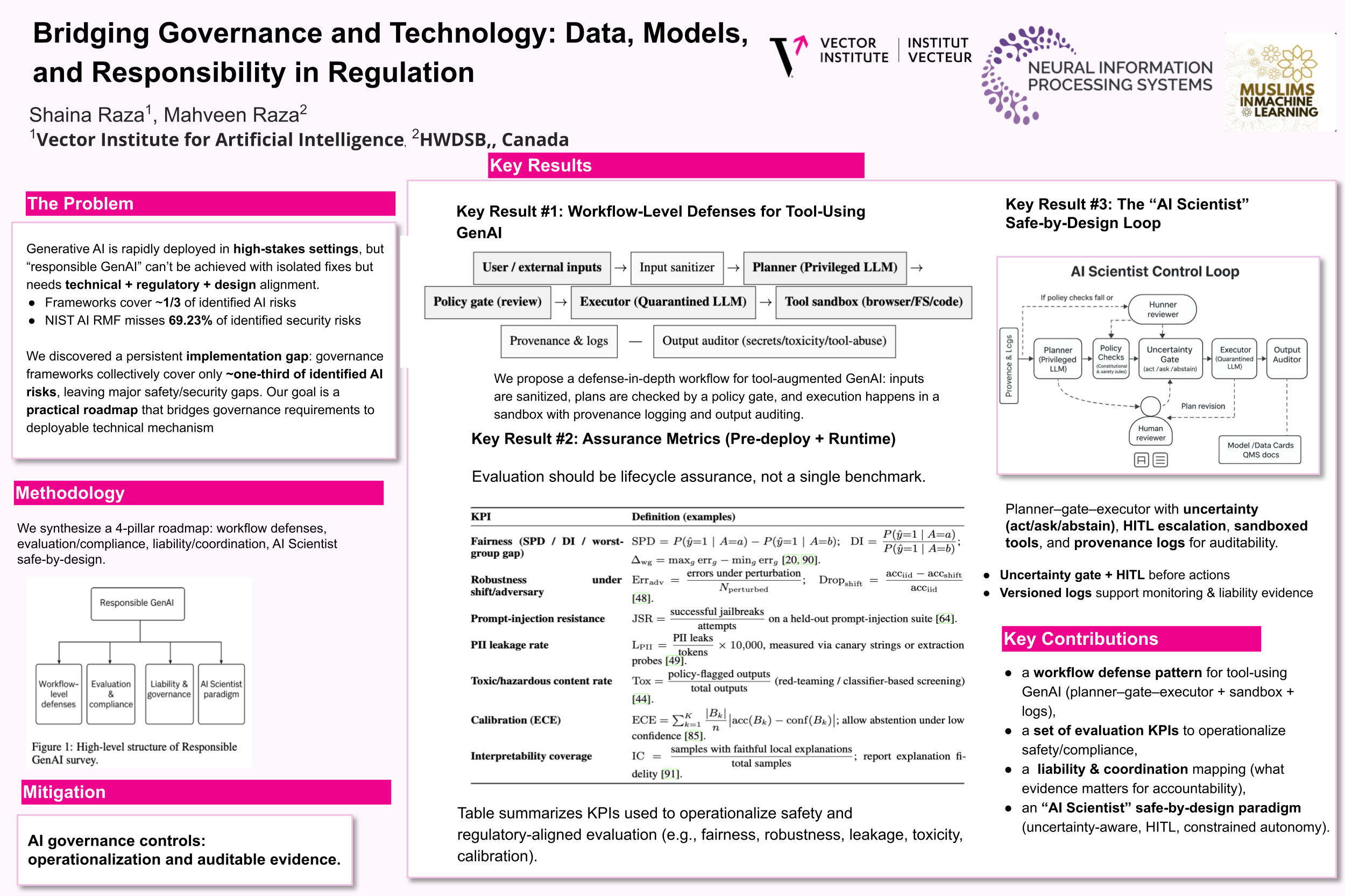
Generative AI systems have seen unprecedented adoption, raising urgent questions about their safety and accountability. This paper emphasizes that Responsible Generative AI cannot be achieved through isolated fixes, but requires a multi-layer synthesis of technical, regulatory, and design approaches. We survey four pillars of this roadmap: (1) workflow-level defenses, such as sandboxing and provenance tracking, that confine models within safe operational boundaries; (2) evaluation protocols and compliance criteria inspired by emerging regulations, including risk assessments, logging, and third-party audits; (3) liability frameworks and international coordination mechanisms that clarify responsibility when AI systems cause harm; and (4) the ``AI Scientist" paradigm, which reimagines AI as non-agentic and uncertainty-aware, enforcing safe operating envelopes through design patterns like planner–executor separation and human-in-the-loop oversight. Taken together, these perspectives highlight how technical safeguards, governance evidence, and safe-by-design paradigms can converge into a coherent strategy for the sustainable and trustworthy deployment of generative AI. Through this review article, we synthesize multidisciplinary insights to guide the development of safer GenAI systems.